
PUMA
The second life of a cat selling at a 30% discount

This is a co-production with Acid Investments, who sourced this idea.
Please give their substack a subscribe and follow.
The next article from me will be after my conference presentation on what I consider one of the most interesting mining investments I have ever seen.
Let’s run to it ……Sorry I had to.
Introduction
The consideration is €35 per share in cash, an over 60% premium to the previous days close.
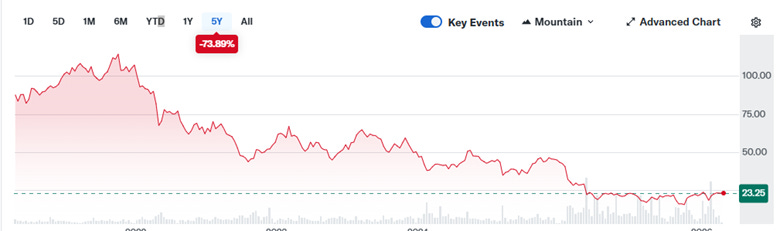
You can buy Puma stock for €23 per share currently. That’s a crazy discount!
Now to be clear, Anta is not launching a takeover.
The company explicitly ruled out a full bid and framed the deal as a strategic partnership plus board representation rather than a prelude to a squeeze‑out.
However, a very serious operator anchored nearly a third of the cap table at €35 in a negotiated block, so it’s time to pay attention.
Puma’s starting point
Puma is the global number three athletic brand behind Nike and Adidas, with 2025 9 month sales of € 5,973.9 million
The P&L is not particularly attractive with EBITDA and revenue shrinking yearly.
The company is barely servicing its debt, but on profitability metrics, it’s not remotely interesting.
In a lot of respects, Puma could be considered a dying brand if something does not change for it and the stock price reflects that sentiment.
However, if you look at previous years, Puma used to be an immensely profitable company.
An optimist could say this company is a global brand with €8+ billion in revenue, sells cheap sales metrics, still has positive free cash flow, and is ready for a turnaround.
Well, I am happy to say we found that optimist, and they are paying up for their beliefs.
Will the real Anta please stand up?
Anta began in 1991 in Jinjiang, Fujian, as a contract shoe manufacturer and migrated into its own‑brand athletic footwear business in the 1990s, eventually listing in Hong Kong in 2007 in what was then the largest domestic sportswear IPO.
Early on it was just another mass‑market local brand.
The strategic shift came in 2009 with the acquisition of Fila’s rights in Mainland China, Hong Kong, and Macao from Belle for about RMB 460 million (USD$52 Million), at a time when Fila China had ~50 stores and was loss‑making.
When Anta took over the Greater China rights, Fila was a drag. Anta repositioned it as a premium fashion‑sport label, shifted it to higher‑end mall locations, tightened product, and layered in collaborations and celebrity marketing that resonated with middle‑class Chinese consumers.
Within a decade Fila’s China revenue had scaled to rival, at times exceed, the Anta core segment, and it became a primary profit engine for the group.
The same pattern, at smaller scale, shows up in Descente China and Kolon Sport, brands that Anta localized, premiumized, and pushed through its retail and e‑commerce backbone.
Amer Sports is another compelling proof of concept for Anta’s playbook.
In 2019, Anta led a consortium, alongside Lululemon founder Chip Wilson, private equity firm FountainVest, and Tencent, to take Amer private for €4.6 billion, acquiring a portfolio that includes Arc’teryx, Salomon, Wilson, and Atomic.
At the time, Greater China and Asia-Pacific were a rounding error in Amer’s revenue mix. Anta’s stated goal was to take the region from roughly 5% of sales to 15%.
By Q3 2025, Greater China was up 47% year-on-year and Asia-Pacific up 54%, with the two regions combined now effectively the largest growth engine in the entire business with Arc’teryx a genuine cultural phenomenon in Chinese cities and Salomon footwear having migrated from ski slopes to city streets across the region.
As you can now tell, Anta today is a huge player.
It isn’t some random Chinese company taking a position in a shoe company, but a smart expert in sneaker and athletic wear turnarounds.
In terms of financials, group revenue was over RMB 70 billion (USD $9 Billion), with operating profit margins of around RMB 18 billion (USD $2.6 Billion).
Fila now accounts for over a third of this revenue.
Including the other smaller brands it has acquired, outside acquired brands are closer to half of the company’s cash flow.
Why Puma fits the playbook
Puma ticks most of the boxes Anta has historically liked.
It has global recognition, decent gross margins, mediocre net margins, and a glaring hole in China.
Puma’s China revenue is estimated at only mid‑single‑digit percent of group sales, far below Nike and Adidas, even though sports participation and athleisure penetration in China still have a long runway.
From Anta’s perspective, the thesis is almost boringly clear. It’s just a rehash of Fila.
Puma was genuinely popular in Hong Kong in the 1980s, and not in a vague, nostalgic sense.
Cherie Chung was the face of a generation of Cantonese culture, and having Pelé alongside her gave Puma a halo in the city that lasted years.
The obvious caveat is that Hong Kong in 1983 and Mainland China in 2026 are very different markets, different consumers, different cultural context. But the brand has resonated with Chinese audiences before, and which, is exactly the playbook Anta used to rebuild Fila. That is not a coincidence.
Take a globally relevant but underperforming brand, plug it into Anta’s China distribution, retail, and digital infrastructure, and use the incremental China profit to justify paying a premium to what public markets assign to standalone Puma.
At the same time, keep Puma’s new management in Germany focused on cleaning up North America, sharpening the performance positioning, and improving DTC economics in the West.
Why No Buyout and the Price gap?
The structure of the deal looks designed to maximize influence while minimizing regulatory friction.
By stopping at 29.06%, Anta stays below Germany’s 30% threshold that would trigger a mandatory takeover offer to minorities.
It still becomes the largest shareholder, displacing Artemis, and has stated it will seek board representation, which gives real strategic input without the cost and political noise of a full bid.
Anta is paying €35 for its block, while the free‑float trades for €23, roughly one‑third below that anchor price even after the news bounce.
Because Anta has ruled out a bid, this is not a typical arbitrage, so the gap has not closed.
Instead, the block price functions as an indication that a highly informed buyer, with a strong history of fixing and scaling sportswear brands, believes Puma is mispriced enough to justify paying real money at a level that public markets have not seen fit to sustain for years.
Conclusion
On a multi‑year view, the “base case” equity story is simple in that Puma grows modestly off the revenue base and returns to its normal profitability metrics.
If that is all that happens, a re‑rating should narrow the gap back to Anta’s €35.
The upside scenario is that Anta’s China machine works the way it did for Fila and the stock doubles in price over the next few years.
For an investor, the question is whether you want to go along for the ride at a discount to what a sophisticated player just paid. I’m good making that bet, although I am more of a Brooks girl 😊
If you enjoyed this write-up, please like and restack.
I don’t get paid to do this, so consider that my reward.
Substack seems to throttle free article writers, which makes attracting new readers difficult. I do not want to charge for this substack, but the algorithm may end up requiring it. I am trying to avoid this, so please spread this substack if you can.
Also, if you have other ideas I should write about, my DM’s are always open on substack and Bluesky :)
All writeups are subject to our TOS
Great idea and post (as an investor).
Yes -- Brooks > Puma (as a runner) but Salomon > all for trail running.
Excellent description.